
Surrogacy in Georgia is an advanced assisted reproductive process in which a woman agrees to carry and give birth to a child for someone else through the IVF procedure. In Georgia, surrogacy is legal for married heterosexual couples.

Surrogacy in Georgia: What You Need to Know
Georgia is one of the few countries in Europe where surrogacy is legal. In Georgia, surrogates are not paid for their services.
Many ethical and moral questions come up when it comes to surrogate mothers. These include: What should happen to the children born through surrogacy? Should they be considered as the child of their surrogate mother? Should they have any rights at all?
When it comes to Georgia’s law, many things need to be considered before going ahead with this process. For example, if you are planning on using a surrogate for your baby, you must ensure that she has signed an agreement with you beforehand.
In Georgia, surrogacy is regulated by state law. There are two types of surrogates available: altruistic surrogates and commercial surrogates. The altruistic surrogate agrees to be a surrogate for free, while commercial surrogates are paid for their services.
Suppose you are considering becoming pregnant with a child through surrogacy. In that case, it’s important to understand what you’re getting into before you enter into this type of agreement with your partner or family member.
Georgia Surrogacy Laws, Regulations & Guidelines
Georgia Surrogacy Laws provide a framework to regulate surrogacy or assisted reproductive technology in the state. The laws outline the rights and responsibilities of both parents and surrogate mothers. Georgia Surrogacy Laws are based on the Uniform Parentage Act, which states that “the child is presumed legitimate.”
According to Georgia’s legislation Article 143, couples who can’t get pregnant or women who can’t sustain pregnancy are allowed conception through a surrogacy program in Georgia. The surrogacy contract is signed between the couple and the surrogate, and the intended parents are deemed parental rights to the child. Both couples and surrogates must consent to the process of surrogacy.
The laws also stipulate that both parents have equal rights to physical custody and visitation with their children but do not have equal rights to legal custody. The law does not define what legal custody is, but it does say that “legal custody may be awarded by a court.” Furthermore, gender selection of the child is not allowed under Georgian reproductive and surrogacy; however, gender testing is permitted for medical reasons.
Georgia law requires that an unmarried woman who is at least 18 years old can enter into a surrogacy agreement as a gestational carrier. This agreement must be in writing and signed by both parties. It was created to protect the rights of intended parents and gestational carriers and to ensure that the surrogate is treated fairly under the law. The law also establishes regulations for medical requirements for gestational carriers and stipulates that the surrogate cannot be paid until after the child’s birth.
Georgian law allows access to both altruistic and commercial surrogacy programs.

Legal requirements for surrogacy in Georgia
- Intended parents should be married heterosexual couples with diagnosed infertility.
- Egg and sperm donors are allowed per Article 144 of the aforementioned law.
- The gametes donation can be anonymous or open.
- After the birth of the child, the intended parents have parental rights, and the surrogate has no right over the child whatsoever.
- The birth certificate is issued within 24 hours of delivery, and both parents are mentioned in the birth certificate.
- Unlike other countries, in Georgia, the surrogate’s consent is not required to register parental rights to the intended parents after the birth of the child. Neither legal order is required for handing the child over to commissioning parents post-birth.
- Children born via surrogacy are eligible for Georgian citizenship if and only if the intended parents also have Georgian citizenship. Foreign intended parents have to apply for citizenship for their child in their home countries.
Apart from Georgian legislation on surrogacy, IPs should be aware of surrogacy, assisted reproductive and adoption law in their home countries for post-birth procedures, such as citizenship of the child.
Which Types of Surrogacy Arrangements are Available in Georgia?
There are three types of surrogacy arrangements in Georgia. They are gestational surrogacy, traditional surrogacy and altruistic surrogacy.
Gestational Surrogacy
Gestational Surrogates carry the child for the intended parents, who provide the eggs, sperm and other reproductive material to create a pregnancy. The surrogate is not genetically related to the child but carries and delivers it for them.
Traditional Surrogacy
Traditional Surrogates carry the child for the intended parents, where the father provides a semen sample for fertilization. The surrogate is genetically related to the child but does not bear any parental rights of the child. This type of arrangement would be considered “traditional” because it’s based on human reproduction rather than assisted reproduction.
Altruistic surrogacy
The term ‘altruistic surrogacy’ refers to an arrangement where one woman agrees to carry another woman’s child for free without expecting payment or any other benefits from either party. The surrogate may be genetically related or unrelated to the intended mother-to-be but has no rights over the child once it is born.
Commercial surrogacy
In commercial surrogacy, the surrogate is compensated other than medical expenses for carrying the pregnancy to terms.
The estimated Cost of Surrogacy in Georgia
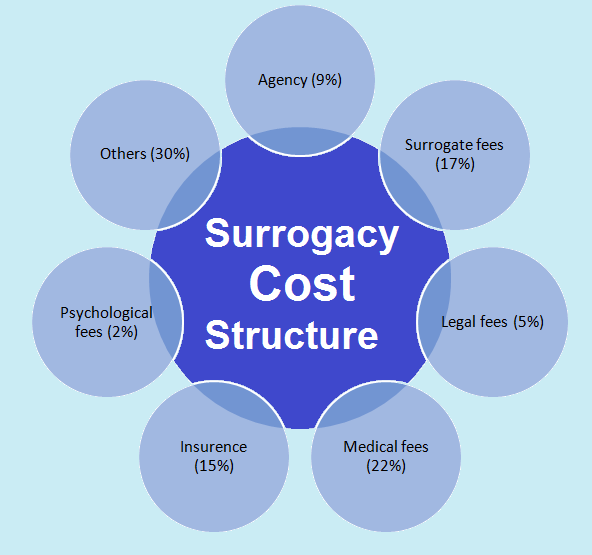
Georgia has comparatively more affordable surrogacy programs than Western and other European countries. The standard cost of surrogacy in Georgia is between $ 40,000 to $ 80,000. However, we offer cheaper surrogacy options with comparable facilities at about $ 39,000 to $ 49,000.
The surrogacy cost, in general, depends on various factors like maternity care, the cost of a surrogacy agency, the cost of an IVF procedure, other medical procedures, surrogate compensation and accommodation, etc.
The procedure, such as preimplantation genetic screening, preimplantation genetic diagnosis, and egg, sperm and embryo donation, can significantly increase the cost of surrogacy.
The cost of surrogacy in Georgia includes the following:
- All consultation fee
- IVF procedure
- Surrogate compensation and accommodation
- All medical expenses for maternity care
- Arrangement of donor
- Surrogacy agency cost
- Medications and supplements
- Delivery charges
- Legal work throughout the procedure
Surrogacy Cost in Georgia
| Surrogacy Program | Estimated Cost (USD) | Description |
|---|---|---|
| Standard Surrogacy Program | $40,000 – $80,000 | Comprehensive surrogacy program offered by fertility clinics and agencies in Georgia. Costs vary based on medical requirements and services included. |
| Affordable Surrogacy Program | $39,000 – $49,000 | Budget-friendly surrogacy package with quality medical care, IVF treatment, surrogate support, and essential legal assistance. |
Estimated Cost of Surrogacy in Georgia
| Expense | Included in Package |
| IVF Treatment & Embryo Transfer | ✔ Yes |
| Surrogate Mother’s Compensation | ✔ Yes |
| Pregnancy Monitoring & Maternity Care | ✔ Yes |
| Surrogacy Agency Coordination | ✔ Yes |
| Medical Tests & Routine Care | ✔ Yes |
| Medications & Supplements | ✔ Yes |
| Surrogate Accommodation (if required) | ✔ Yes |
| Legal Documentation & Administrative Support | ✔ Yes |
| Egg Donation (if required) | Available at an additional cost |
| Sperm Donation (if required) | Available at an additional cost |
| Embryo Donation (if required) | Available at an additional cost |
| Preimplantation Genetic Testing (PGT-A/PGS) | Additional cost |
| Preimplantation Genetic Testing for Monogenic Disorders (PGT-M/PGD) | Additional cost |
| International Travel & Visa Expenses | ✘ Not Included |
| Hotel & Personal Expenses for Intended Parents | ✘ Not Included |
Do you want to learn more about the Surrogacy Cost in Georgia? Click Here.
What is the success rate of Surrogacy in Georgia?
 The success rate for surrogacy in Georgia is comparable with that of well-developed nations like the USA and the UK. The success rates for taking home a baby through the Georgian surrogacy program are about 60-70% via traditional surrogacy and 80-90% via gestational surrogacy.
Furthermore, if intended parents opt for donor embryos or eggs or sperm, then a success rate of 99% can be achieved.
Surrogate Parenting Rights in Georgia
Georgia law provides specific rights and protections to surrogate parents who are raising a child. These rights include the right to custody, visitation, and child support.
Surrogate parents are defined as individuals who have been legally appointed by the court or an agency to raise a child that is not their own. Surrogates can be previously married individuals who were never legally recognized as the child’s parent, heterosexual couples, single people, or gay couples.
For a person to be considered a surrogate parent, they must be at least 18 years old and have no children. They must also have given birth within the last 18 months before being appointed as a surrogate parent.
In Georgia, a state that allows the surrogate mother to carry and give birth to a child to fulfil the biological parents’ desire for children, there is no right for a surrogate mother over the child born through surrogacy.
Surrogate parenting is becoming more popular as people see it as an option for those who want to have children but can’t due to health reasons or other circumstances. The process is also becoming more common because it allows parents to have their own genetic children without undergoing fertility treatments.
Ethical Considerations for Surrogate Motherhood in Georgia
Surrogate mothers are also known as gestational carriers and surrogates. In many cases, they are paid for their services and may or may not have any contact with the baby’s biological parents.
This practice has existed for over 30 years, but it has recently become a controversial topic. Many people are asking questions about how ethical this practice is when both parties involved do not have any genetic connection with each other.
The ethical considerations for surrogate motherhood in Georgia are as follows:
- The surrogate mother must be able to handle the pregnancy without any medical complications.
- The surrogate must be healthy enough to carry the pregnancy.
- The genetic parents must be able to support the child after birth and provide care for them until they turn 18 years old or are legally emancipated from their parents.
- If a genetic parent rejects their child after birth, then that person will not be allowed back into the family or allowed visitation rights.
Benefits and Drawbacks of Surrogacy in Georgia
Benefits of Surrogacy in Georgia
- Affordable surrogacy cost; surrogacy in Georgia is the cheapest among the European countries
- World-class medical and fertility facilities
- High success rate
- Cross-border surrogacy available
- Various donor options are available
- All nationalities allowed
- Easy legal procedure
- Georgian citizenship for children born through surrogacy if their parents are Georgian citizens
- Support and guidance throughout the surrogacy
- Money-back and guaranteed surrogacy programs
- Birth certificate issued within 24 hours
Drawbacks of surrogacy in Georgia
- Only married heterosexual couples are allowed
- The couple must possess a record of clinical infertility
- The couple has to provide a record of previous miscarriages and failed IVF treatment
- Gay and same-sex surrogacy not allowed
- Single parent surrogacy is not allowed
FAQs Related to Surrogacy in Georgia
Is Gay surrogacy allowed in Georgia?
Although Georgia is a progressive country, gay or LGBTQ+ surrogacy is not legalized in the country as we speak. Georgian surrogacy programs only offer surrogacy for heterosexual married couples and de facto couples.
Can we ship embryos to Georgia for surrogacy?
Of course! Our surrogacy program provides cross-border surrogacy options to our clients. We can culture embryos in any country and ship them to Georgia and vice versa.
What nationalities are allowed to partake in surrogacy in Georgia?
Married heterosexual couples from all nationalities are allowed to partake in surrogacy in Georgia. The couple should be aware of both Georgian surrogacy laws, and surrogacy and citizenship laws in their home country before moving forward with their plan. After the ban on commercial surrogacy in India, Georgian surrogacy programs are an affordable alternative.
What are the options for donors and surrogates in Georgia?
In Georgia, intended parents can pick and choose from various donor options from different nationalities. The following donors are preeminently available in Georgia:
- Indian egg donor and surrogacy
- Caucasian egg donor and surrogacy
- African egg donor and surrogacy
- Asian egg donor (Thailand based)
Can a single person apply for surrogacy in Georgia?
No, single-parent surrogacy is not allowed in Georgia. However, De facto couples are allowed to apply for surrogacy in Georgia.
Does Georgia offer affordable surrogacy?
Yes, Georgia offers comparably affordable surrogacy programs. Many surrogacy packages are available in Georgia according to the parent’s fertility needs and severity of infertility, such as Traditional surrogacy, Gestational Surrogacy, Surrogacy with donor eggs, Surrogacy with donor sperm, Surrogacy with donor embryos, Cross-border surrogacy, etc.
How long does the exit process take after the successful delivery of the child through surrogacy in Georgia?
The exit process can take 2 weeks to 8 weeks, depending on your citizenship. The exit process for US citizens takes about 2-4 weeks, and for Australian citizens, it can take 5-6 weeks. For UK citizens, the exit process takes the longest from 8-10 weeks. The quicker your embassy moves with the procedure, the less time it will take.