
Surrogacy Laws in Kenya: Current Legal Framework, Agreements and Rights
Surrogacy has become an important option for people who are unable to carry a pregnancy themselves. Kenya has developed a growing assisted reproductive technology sector, but the legal position surrounding surrogacy has historically been less clearly defined than in countries with dedicated surrogacy legislation. Understanding the surrogacy laws in Kenya is therefore important for intended parents, surrogate mothers, fertility clinics and international patients considering treatment in the country.

The law in Kenya is changing. The country’s Parliament is looking at a new bill called the Assisted Reproductive Technology Bill,2022. This bill wants to create rules for things like assisted reproductive technology and surrogacy. The National Assembly made some changes to the bill and passed it in November2025. Then, they sent it to the Senate. In 2026, the Senate started discussing the bill. So, we should not say that the things in the bill are already law, because they are not yet. The bill is still being talked about and has not been finalized.
 This guide explains the current surrogacy laws in Kenya, the existing legal position, proposed regulations, parental rights, surrogacy agreements and important considerations for intended parents.
What Are the Surrogacy Laws in Kenya?

In Kenya, the laws about surrogacy are made up of a few different things. These include principles from the constitution, laws about families and kids, what courts have decided, how doctors practice medicine, and new laws being developed for Assisted Reproductive Technology. All these things together shape what surrogacy laws mean in Kenya right now.
For a long time, Kenya didn’t have a law that focused only on surrogacy. It wasn’t until a2015 court case that the issue came to light, with the court pointing out that there was no specific law to guide surrogacy arrangements. This meant that people in Kenya who were looking into surrogacy as an option didn’t have clear rules to follow. The court’s decision highlighted the need for a dedicated law to regulate surrogacy in the country.
More recent cases show that this legal gap has continued to create questions about parentage and the legal status of children born through surrogacy. In January 2026, the High Court again noted that, in the absence of specific surrogacy legislation, the woman who gives birth retains legal parenthood until a court order transfers that status.
If you’re looking into surrogacy laws in Kenya, it’s essential to know the difference between the current laws and the proposals in the Assisted Reproductive Technology Bill. This bill has suggestions for how surrogacy should be handled, but it’s not yet a law. So, when you’re researching, make sure you understand what’s already in place and what’s being proposed for the future.
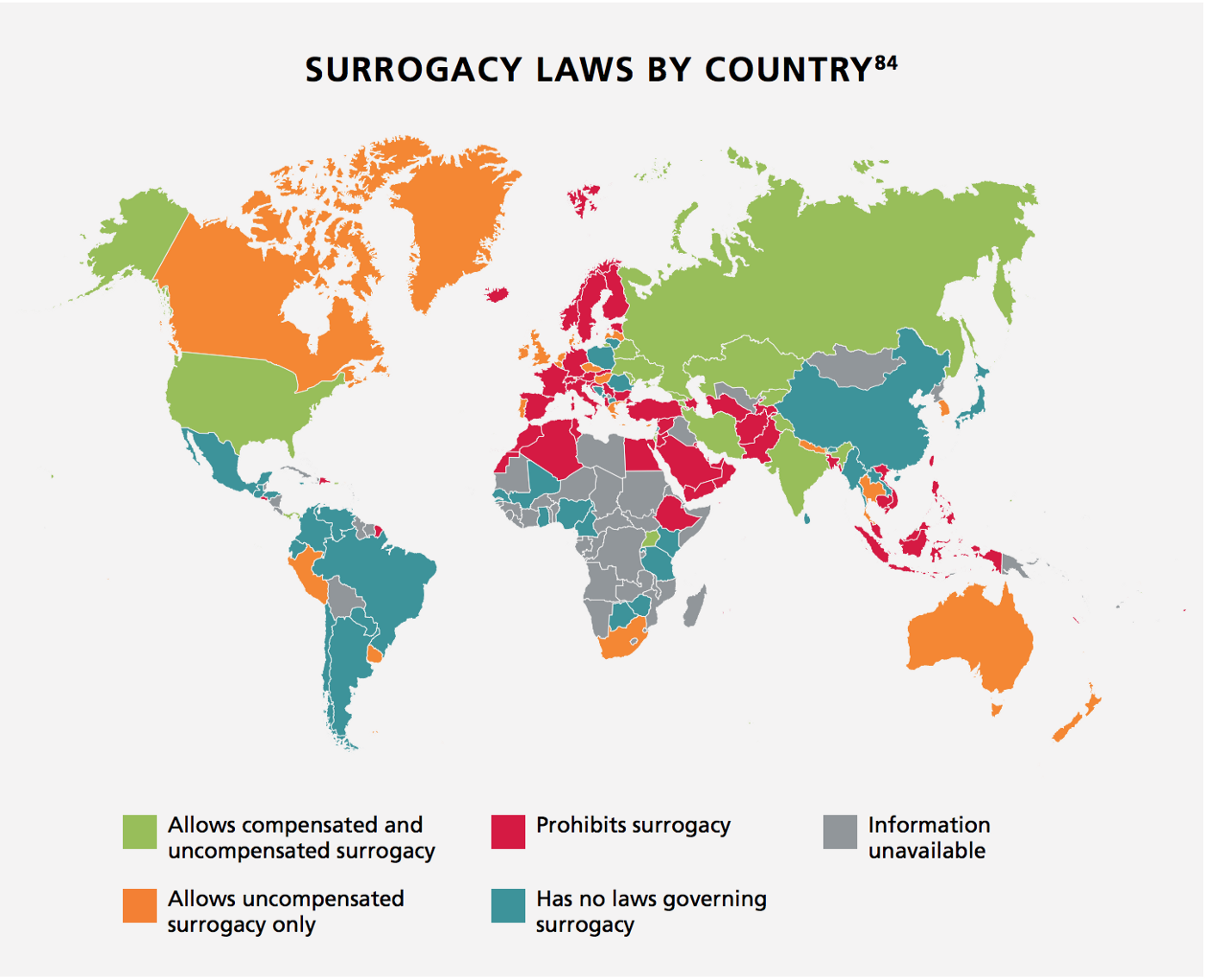
Is Surrogacy Legal in Kenya?
Surrogacy has not historically been expressly prohibited by a dedicated Kenyan surrogacy statute. However, the absence of a comprehensive statutory framework means that the legal process can involve contractual, parental, medical and court-related considerations.
Kenya’s surrogacy laws are complex and can’t be summed up as just a total ban or a fully regulated commercial system. The truth is, the country’s laws on surrogacy are more nuanced, and it’s essential to understand the specifics to get a clear picture. While some aspects of surrogacy might be allowed, others might be restricted or even prohibited, making it crucial to look at the details to avoid misconceptions about what is and isn’t permitted in Kenya.

Kenyan courts have considered surrogacy-related cases and have developed legal principles concerning the status of children and intended parents. For example, the High Court has dealt with adoption proceedings involving children born through surrogacy.
So, people who want to be parents through surrogacy should get the most up-to-date legal advice in Kenya before making any arrangements.
Assisted Reproductive Technology Bill and Surrogacy

A major development in the surrogacy laws in Kenya is the Assisted Reproductive Technology Bill, 2022.
The Bill was introduced to create a legal framework for assisted reproductive technology services, including IVF, gamete and embryo donation and surrogacy. The National Assembly passed the Bill with amendments on 11 November 2025 and subsequently transmitted it to the Senate.
In2026, the Senate looked at the Bill. They passed it on August 4,2026, with 27 votes in favor and no votes against, and then sent it to a special committee to review it further.
This means that the proposed surrogacy laws in Kenya were still part of an ongoing legislative process at the time of writing.
Proposed Restrictions on Commercial Surrogacy
A major change that Parliament has talked about is stopping people from doing surrogacy for money. The version that the National Assembly agreed on said that surrogacy can be allowed, but only if people are doing it to help others, not to make a profit, and only in certain situations.
A major change that Parliament has talked about is stopping people from doing surrogacy for money. The version that the National Assembly agreed on said that surrogacy can be allowed, but only if people are doing it to help others, not to make a profit, and only in certain situations.
Websites that talk about surrogacy laws in Kenya need to keep their information up to date. They should make sure to update their legal pages often, instead of showing old versions of the law as if they are still current. This way, people can get the right information and stay informed about the latest changes in surrogacy laws in Kenya.
What Is Altruistic Surrogacy?
Surrogacy is when someone carries a baby for someone else. There are different kinds of surrogacy. Some surrogates get paid for carrying the baby, but others don’t. This is called altruistic surrogacy. In altruistic surrogacy, the person carrying the baby doesn’t get any money for doing it, except maybe to cover some of the costs of being pregnant. The rules about what expenses can be covered vary depending on where you live and what the laws are.
The Assisted Reproductive Technology Bill has proposed an altruistic model. Parliament’s materials state that the approved National Assembly version expressly prohibited commercial surrogacy while allowing altruistic surrogacy subject to specified conditions.
This distinction is particularly important when researching surrogacy laws in Kenya, because commercial arrangements may be treated differently from arrangements where only permitted expenses are covered.
Surrogacy Agreements in Kenya
Having a written surrogacy agreement is really important when it comes to surrogacy. This agreement is like a roadmap that outlines what everyone’s responsibilities are and what they’re expecting from each other. It can’t fix every possible legal problem that might come up with who the parents are, but it can definitely help make things clearer. A well-written agreement can establish what everyone wants and needs, and that can make a big difference.
A surrogacy agreement may address:
- Identity of the intended parents
- Identity and responsibilities of the surrogate
- Medical procedures
- IVF and embryo transfer
- Pregnancy monitoring
- Medical expenses
- Insurance and healthcare arrangements
- Decisions concerning pregnancy
- Confidentiality and privacy
- Responsibilities after birth
- Transfer of parental responsibility
- Dispute-resolution procedures
- Protection of the child’s interests
What happens with individual provisions depends on Kenyan law and the situation.
In Kenya, new laws about surrogacy are being developed. These laws will likely decide what needs to be in a surrogacy agreement for it to be valid. They will also determine how these agreements should be approved and documented. This means that in the future, there will be clear rules about what should be included in a surrogacy contract and how it should be officially recorded.
Who Is the Legal Mother in Kenya?
One of the most important legal questions under the current surrogacy laws in Kenya concerns the legal status of the woman who gives birth.
Kenyan case law has established an important principle: where there is no specific statutory framework transferring parenthood in a surrogacy arrangement, the woman who gives birth may remain the legal mother until a court order provides otherwise.
The High Court reaffirmed this principle in January 2026. The court stated that, in the absence of specific surrogacy legislation, the birth mother retains legal parenthood until a court order, such as an adoption order, transfers that legal status, even where she does not have a genetic relationship with the child.
This makes the issue of parentage particularly important for intended parents considering surrogacy in Kenya.
Role of the Courts
Courts have played an important role in resolving issues arising from surrogacy arrangements because of the historical absence of dedicated legislation.
Kenyan courts have considered cases involving children born through surrogacy and applications by intended parents to obtain legal parental status. In one 2025 case, the High Court allowed intended parents to adopt a child born through a surrogacy agreement.
Earlier cases similarly addressed the relationship between surrogate mothers, genetic parents and intended parents.
These cases demonstrate why understanding the surrogacy laws in Kenya requires more than simply looking at a contract between the parties. The legal status of the child and the process for establishing parental rights can be equally important.
Rights of the Surrogate Mother
Any discussion of the surrogacy laws in Kenya should consider the rights and welfare of the surrogate.
A woman carrying a baby for someone else should get good medical care all through her pregnancy. It’s also important she knows what medical procedures are involved, what could go wrong, and what she’s agreed to do before anything starts. This way, she’s prepared for everything that’s going to happen.
Important areas may include:
- Independent legal advice
- Informed medical consent
- Appropriate antenatal care
- Access to medical treatment
- Protection of personal information
- Clear understanding of expenses
- Protection from coercion
- Counselling where appropriate
- Clear contractual responsibilities
The developing ART framework is intended to provide greater regulation of assisted reproductive technology services and protect the interests of surrogate mothers, intended parents and children.
Rights of Intended Parents
People who want to be parents should know where they stand with the law before they start any treatment.
Depending on the applicable legal framework and individual circumstances, intended parents may need to address questions concerning:
- The validity of the surrogacy agreement.
- The connection between a child’s genes and those of the parents who want to care for them.
- The legal status of the birth mother.
- Birth registration.
- Court procedures for establishing parentage.
- Immigration or citizenship requirements for international intended parents.
- Medical documentation.
- Responsibilities for the child after birth.
Planning surrogacy in Kenya can be complex, and that’s why getting professional legal advice is really important.
Surrogacy and Birth Registration
Birth registration is another important issue under the developing surrogacy laws in Kenya.
New rules are being suggested to change how children born through special help to get pregnant are registered. Papers from the government are looking at ways to make sure the people who wanted to have the child are listed on the birth certificate, but only after checking that everything was done correctly and legally.
This would happen after a surrogacy agreement, which is when someone else carries and gives birth to the baby, has been verified and all other requirements have been met. The goal is to make the process clearer and more straightforward for everyone involved.
But we should not consider these suggestions as law just yet, until they have gone through the whole process and are officially in effect.
So, if you’re planning to have a child, it’s really important to get the most up-to-date information about registering their birth before you make any travel plans or arrangements for after they’re born.
International Surrogacy in Kenya
Kenya has become a popular destination for people from other countries who are looking into having a baby with the help of a surrogate. If you’re thinking of going to Kenya for surrogacy, it’s really important to understand the laws around it. You need to be careful when you’re looking at the rules and regulations about Surrogacy in Kenya, especially if you’re from another country.
Cross-border surrogacy can involve more than Kenyan law. The laws of the intended parents’ country of citizenship or residence may also affect:
- Recognition of parentage
- Recognition of parentage
- Passport applications
- Travel documents
- Immigration
- Court orders
- Recognition of surrogacy agreements
- Genetic-parentage requirements
A child born in Kenya does not automatically resolve all citizenship or immigration questions for foreign intended parents.
So, if you’re from another country and need help with something in Kenya, it’s a good idea to talk to a lawyer who knows the laws in Kenya. You might also want to get advice from a lawyer in your own country, just to make sure you’re covering all your bases.
Is Commercial Surrogacy Allowed in Kenya?
The answer requires careful distinction between the current legal position and the proposed statutory framework.
In the past, Kenya didn’t have a law that specifically dealt with commercial surrogacy. But now, there’s a proposed law about assisted reproduction that includes rules about commercial surrogacy.
The law that was passed by the National Assembly clearly says that commercial surrogacy is not allowed, but it does permit altruistic surrogacy as long as certain conditions are met. This means that people can still be surrogates for others, but they can’t do it for money. The goal is to make sure that surrogacy is done in a way that’s fair and safe for everyone involved.
We should be careful what we say on websites about the new rules. Even though people are talking about them, they haven’t been officially passed yet. It’s still making its way through Parliament in2026. So, we shouldn’t say they’re already a law that applies to the whole country.
It’s really crucial to understand this difference if you’re looking into surrogacy laws in Kenya on the internet.
Why the New Legal Framework Matters
The development of the surrogacy laws in Kenya is significant because assisted reproductive technology has expanded faster than the country’s dedicated statutory framework.
A comprehensive framework could provide clearer rules concerning:
- Licensing of fertility providers
- Regulation of assisted reproductive technology
- Surrogacy agreements
- Rights of surrogate mothers
- Rights of intended parents
- Protection of children
- Donor arrangements
- Record keeping
- Medical standards
- Consent
- Birth registration
- Dispute resolution
- Prohibited practices
The Health Committee in Parliament has pointed out that not having clear rules is causing confusion about children born through surrogacy and worries that some people might be taken advantage of.
What Should Intended Parents Check Before Surrogacy in Kenya?
Before entering a surrogacy program, intended parents should carefully review the legal and medical arrangements.
A practical checklist includes:
1. Check the current law
The surrogacy laws in Kenya are developing, so confirm the legal position at the time treatment is planned.
2. Obtain independent legal advice
Intended parents and the surrogate should understand their respective rights and obligations.
3. Review the surrogacy agreement
The agreement should clearly identify the parties and explain financial, medical and parental responsibilities.
4. Confirm the fertility clinic
Make sure the clinic and the doctors or nurses working there have the right qualifications and are following all the necessary rules and regulations in Kenya.
5. Understand parentage procedures
What happens after a child is born – how do you figure out who the legal parents are? Do you need to go to court or is there some other process you have to follow?
6. Consider international requirements
Foreign intended parents should investigate citizenship, immigration and travel-document requirements before treatment.
7. Protect the child’s interests
The child’s legal identity, documentation, parental status and long-term welfare should remain central to the process.
Conclusion
In Kenya, the laws around surrogacy are still changing and growing, so it’s not like there’s one straightforward rulebook – instead, it’s a complex system that’s still being developed.
In Kenya, the courts have often had to step in to resolve disagreements about surrogacy. This is because, until now, there hasn’t been a specific law that covers all parts of the surrogacy process.
Recently, the courts have made some important decisions that show how crucial it is to clearly define who the legal parents are. This is especially significant because, under current rules, the woman who gives birth to the child is considered the legal mother, unless a court decides otherwise and transfers the parental rights to someone else.
Kenya’s Parliament is working on a new law called the Assisted Reproductive Technology Bill. This law will help control how some medical services are used to help people have babies. The National Assembly already agreed on the law in 2025, and now the Senate is looking at it too. The idea is to make rules for these medical services and also to make some changes to how surrogacy works, like not allowing people to pay others to carry their babies just for money.
If you’re thinking about surrogacy, it’s really important to check the current laws in Kenya. Don’t just rely on old information you find online, because laws can change and you need to know what’s in force right now. This will help you make informed decisions and avoid any potential issues during the treatment process.
For intended parents, surrogate mothers and international patients, obtaining independent Kenyan legal advice before signing an agreement or starting treatment is an important step. The legal position may depend on the parties’ nationality, genetic relationship to the child, the wording of the agreement, medical circumstances and the applicable law at the time.
Frequently Asked Questions about Surrogacy Laws in Kenya
Is surrogacy legal in Kenya?
Kenya has never had a complete law that deals with surrogacy, so courts have had to make decisions on surrogacy cases. Even though it’s 2026, the government is still thinking about making new laws about assisted reproduction, but nothing has been finalized yet.
Are commercial surrogacy arrangements allowed in Kenya?
The new rules about having a baby with the help of another woman are not yet final. They say it’s not okay to pay someone to carry a baby, but it’s okay if someone does it for free and under certain conditions. We have to wait until the whole process is done before we can say these rules are actually laws.
Who is the legal mother of a child born through surrogacy in Kenya?
Recent Kenyan case law states that, in the absence of specific legislation, the woman who gives birth retains legal parenthood until a court order transfers it.
Can intended parents obtain legal parenthood?
In Kenya, the courts have handled cases where people wanting to be parents have asked for legal rights as parents. This includes cases where children were born with the help of a surrogate mother. The way the court handles each case is different and depends on what happened in that specific situation.
Should foreign intended parents seek legal advice?
Yes. International surrogacy may involve Kenyan law as well as citizenship, immigration and parentage rules in the intended parents’ home country.
Will the surrogacy law in Kenya change?
In Kenya, the laws about assisted reproduction are being looked at and might be changing. A bill about this was going through the parliament in 2026, so it’s a good idea to check the latest laws before getting any treatment. This will help make sure everything is done correctly and legally.